Life Fellows
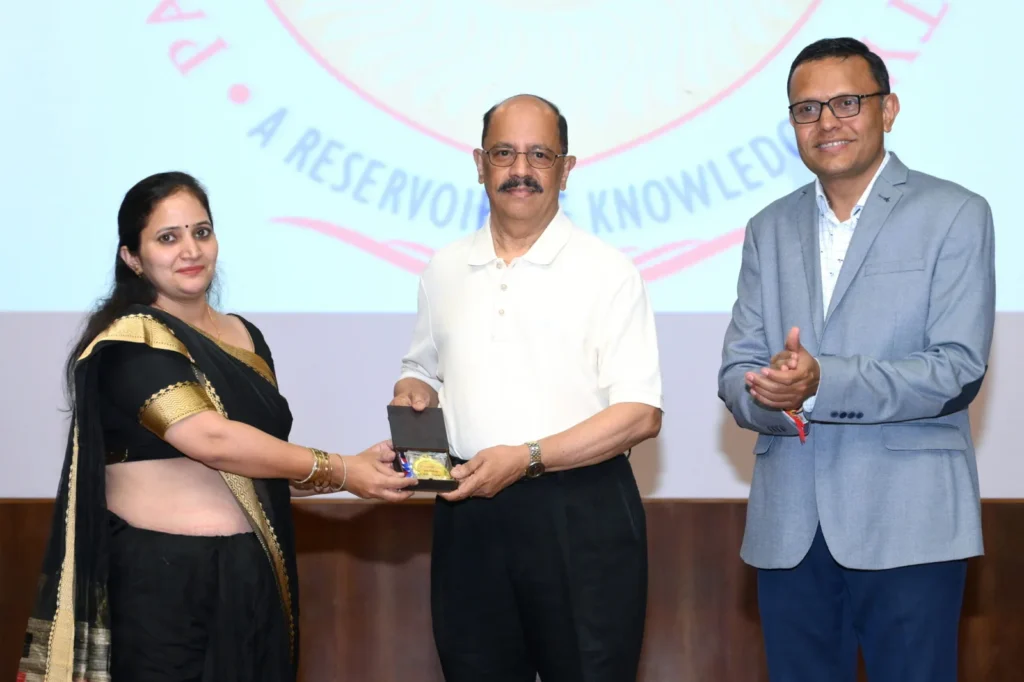
Dr. Sudakhar Rao
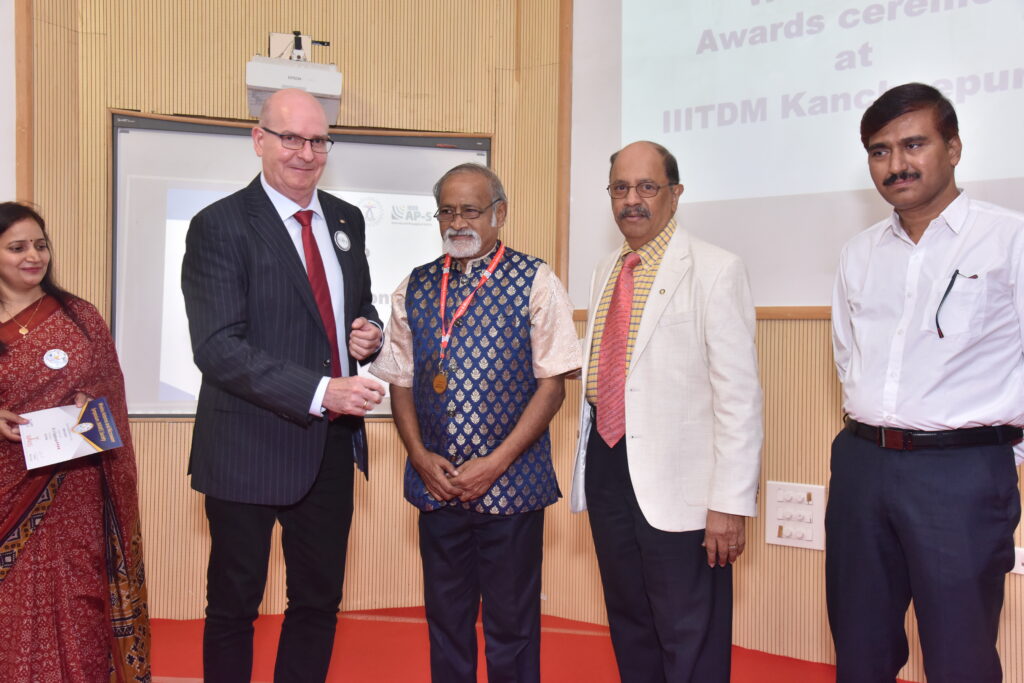
Life Fellow WAMS society receiving medal
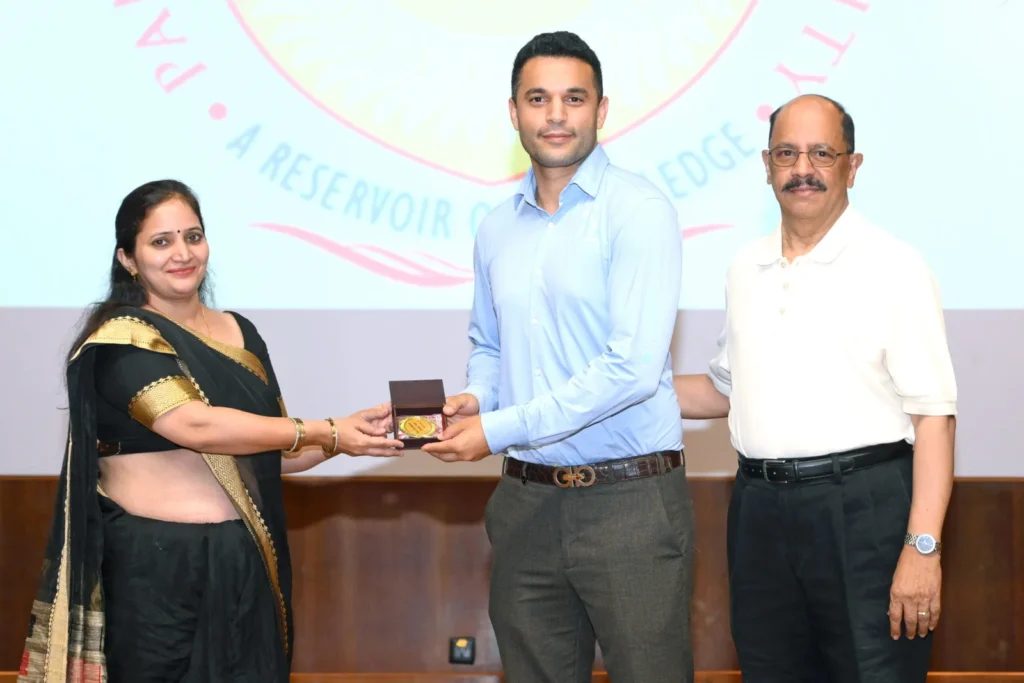
Dr. Nacer Chahat
(NASA/JPL)
Life Fellow WAMS society receiving medal
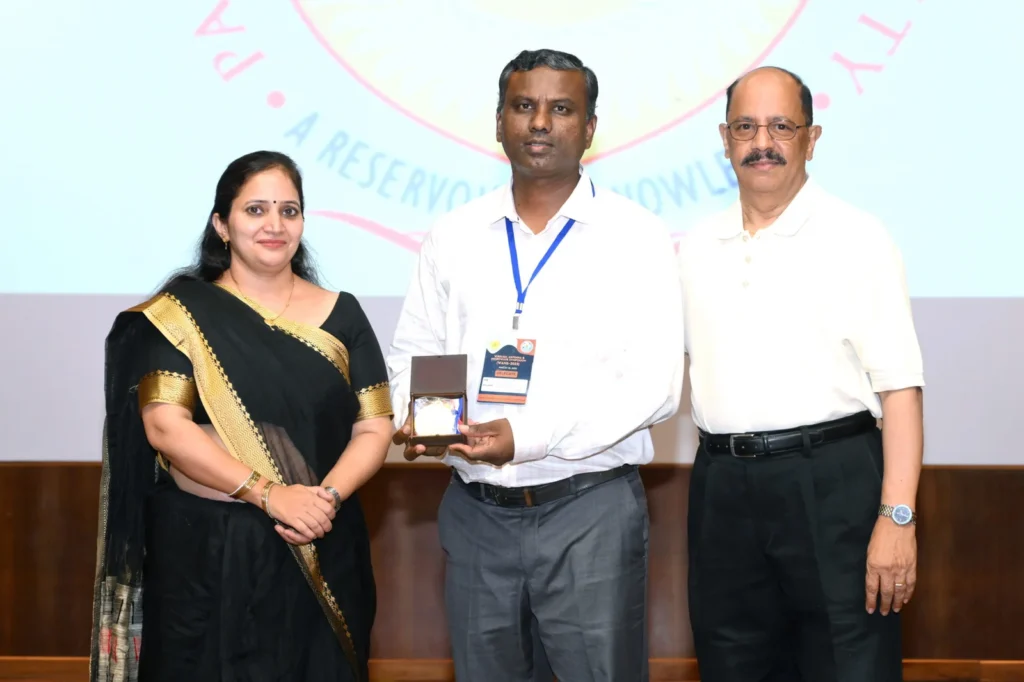
Dr. Navin Kumar
Dr. Mahesh Appajappa receiving medal of
Dr. Navin Kumar
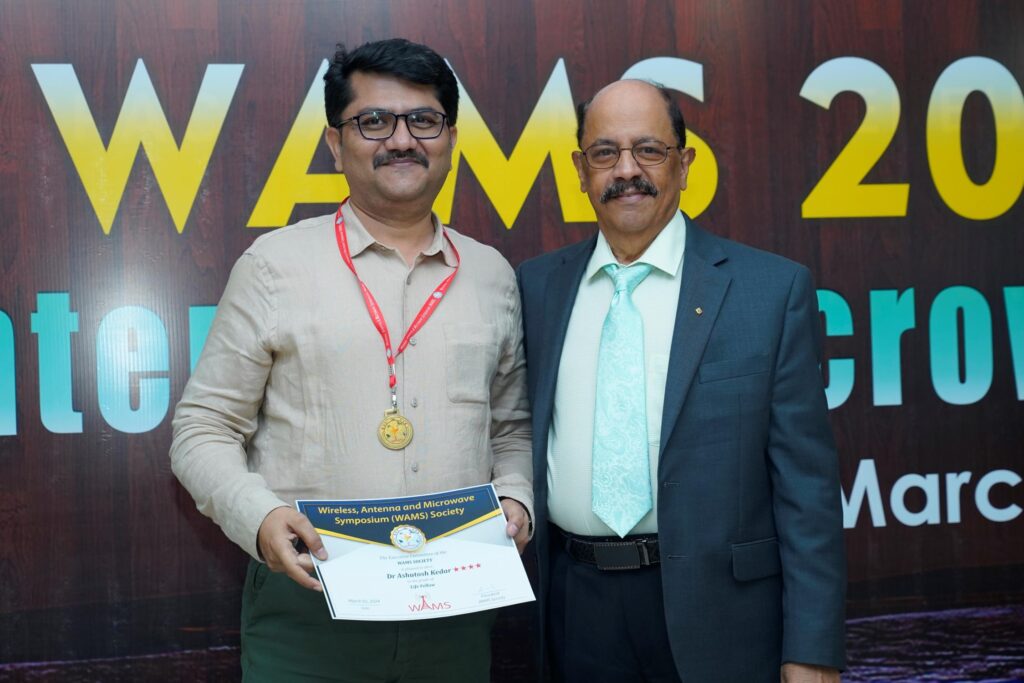
Dr Ashutosh Kedar
Dr. Ashutosh Kedar holds a Ph.D. in Electronics Science, an M.Tech. in Microwave Electronics, and M.Sc. and B.Sc. degrees in Physics from the University of Delhi, and has over 21 years of professional experience as an electromagnetic engineer. He has made significant contributions to the design and development of antennas, antenna arrays, and RF/Microwave subsystems for various AESA radar platforms, along with earlier research on electromagnetic modelling of normal and HTS microwave components using MoM techniques. His research interests span computational electromagnetics, evolutionary optimization, and wide-scanning active phased array antennas. Dr. Kedar has authored more than 100 research papers, holds a patent on a radiating element for active phased arrays, contributed book chapters, and authored the Artech House book Sparse Phased Array Antennas: Theory and Applications. He has received several awards for radar development and multiple best paper awards, including at ICMARS, ATMS18, WAMS 2022 and 2024, as well as the IETE Hari Ramji Toshniwal Award (2023) and IETE CDIL Award (2024). A Life Fellow of WAMSS, Fellow of IETE, Senior Member of IEEE, and LM-ACES, he actively volunteers for IEEE APS, MTT-S, AESS, and AMTA-India, and has served the IEEE AP/MTT-S Bangalore Chapter as Secretary, Vice Chair, and currently as Chair. He has contributed to major IEEE conferences including MAPCON 2022, IEEE SPACE 2024, Connect 2025, WAMS 2023, WAMS 2024, WAMS 2025 and MAPCON 2025.
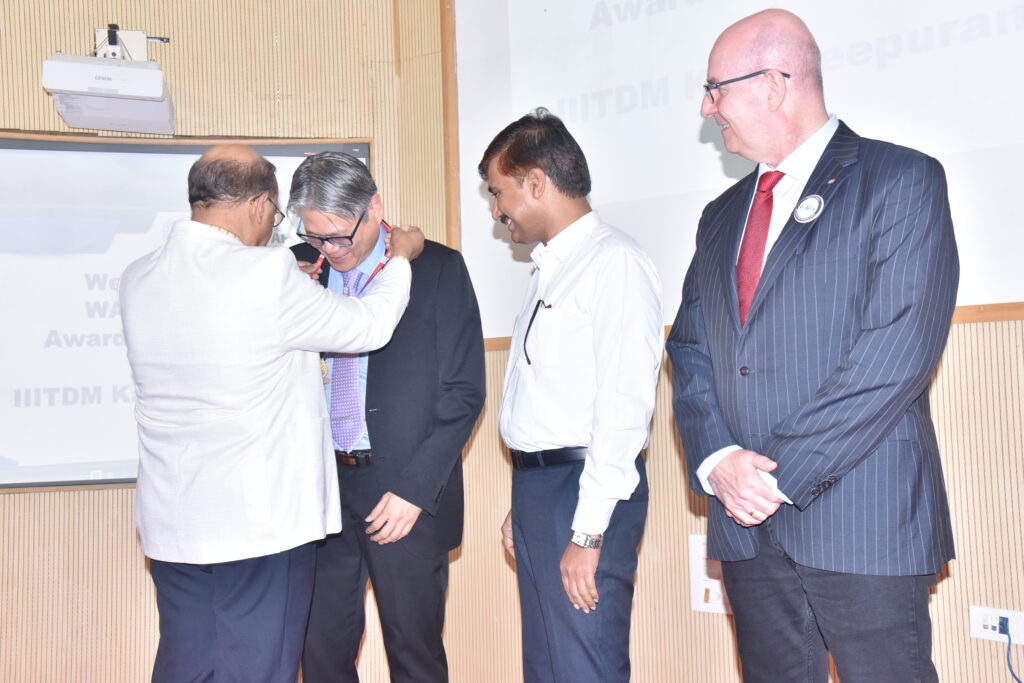
Chow-Yen-Desmond Sim
Prof. Chow-Yen-Desmond Sim, is an internationally recognized antenna researcher and educator who is currently serving at Department of Electrical Engineering at National Sun Yat-sen University. He received his B.Sc. (1998) and Ph.D. (2003) degrees in Engineering from the University of Leicester, U.K., and began his academic career as an Assistant Professor at Chienkuo Technology University (2003–2007), joined Feng Chia University (FCU) as Associate Professor in 2007, rising to Full Professor in 2012 and Distinguished Professor in 2017. Prof. Sim has authored or co-authored over 220 SCI-indexed papers, with research spanning 5G/6G antenna design, VHF/UHF tropospheric propagation, and RFID applications. He is a Fellow of IEEE (AP-S), IET, AAIA, a Life Fellow of WAMS-Society, and a Life Member of IAET (Taiwan). Widely active in the global EM community, he has served as TPC Member, Sub-Committee Chair, Track Chair, and TPC Chair for numerous international conferences, and was General Co-Chair of ISAP 2021. He has delivered keynote speeches at IEEE SOLI 2018, ISAP 2024, and WAMS 2025, and serves as an IEEE AP-S Distinguished Lecturer (2024–2026), giving invited DL talks across Asia. Prof. Sim has held major IEEE leadership roles including Chair of the IEEE AP-S Taipei Chapter (2016–2017) and founding Chair of the IEEE Council on RFID Taipei Chapter (2017–2020). His editorial contributions include service as Associate Editor for IEEE Access (2016–2021), and ongoing roles with IEEE AWPL, IEEE Journal of RFID, and IJRF&MCAE. In industry, he has been a technical consultant to SAG since 2016 and to Avary, the world’s largest PCB manufacturer, since 2018. His excellence has been recognized through eight consecutive IEEE AP-S Outstanding Reviewer Awards (2014–2021) and the IEEE AWPL Outstanding Associate Editor Award (2018). Elevated to IEEE Fellow (Class of 2025), Prof. Sim continues to be a leading global figure in antennas, propagation, and RF technologies.
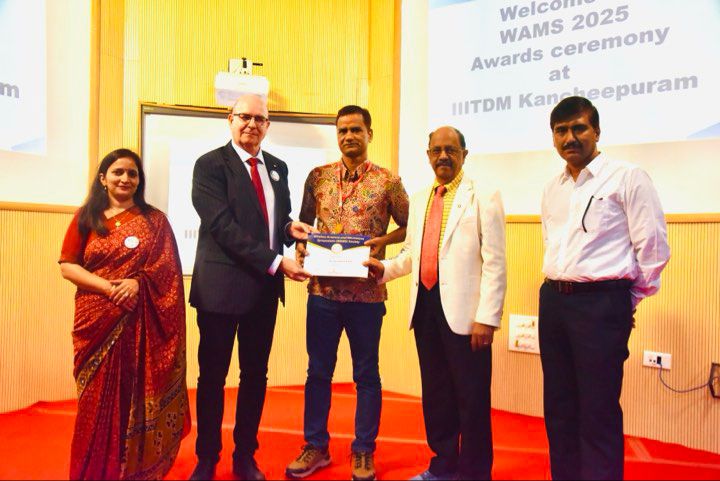
Nasimuddin
Dr. Nasimuddin is a Principal Scientist at the Institute for Infocomm Research (I2R), ASTAR, Singapore, and an internationally recognized expert in RF, microwave, and antenna engineering, with research spanning wideband and high-gain metamaterial antennas, millimeter-wave phased arrays, reconfigurable/intelligent surfaces, RF energy harvesting, satellite antennas, and advanced beamforming systems. He holds a Ph.D. in Electronic Science (2004) from the University of Delhi and has previously served as an Australia Postdoctoral Research Fellow at Macquarie University. With over 250 research publications, multiple books, 8 technology licenses, 14 disclosures, and several U.S./Singapore patents, his work has significantly advanced antenna technologies for satellite communication, RFID, IoT, NDT sensing, and wireless power transfer. He is listed among the world’s top 2% scientists (2023, 2024) and has received several prestigious recognitions including the URSI Young Scientist Award (2005) and ASTAR service awards. A Senior Member of IEEE, he has contributed extensively to the IEEE MTT/AP community, served on editorial boards of major journals, delivered numerous invited/keynote talks worldwide, and led/organized special sessions at flagship conferences such as APS, APMC, ISAP, APCAP, and EuCAP.
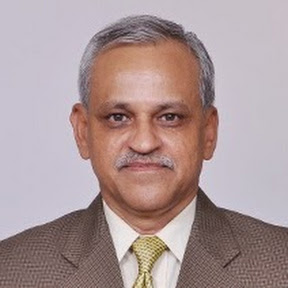
Dr. S. Raghavan
Dr. S. Raghavan, Professor (HAG, Retd.) of Electronics and Communication Engineering at NIT Tiruchirappalli and currently Visiting Faculty, is a distinguished educator and researcher with nearly 40 years of contributions to microwave engineering. He established state-of-the-art Microwave Integrated Circuit and Microwave Laboratories at NIT Trichy, guided 16 Ph.D. scholars, and published over 130 journal papers, 140 international conference papers, and three patents. His work spans MICs, RF/MEMS, BioMEMS, metamaterials, antennas, filters, SAR reduction, and biomedical microwave applications. Dr. Raghavan has received numerous awards including Best Faculty Award, multiple Best Researcher Awards, IETE Ranjana Pal Award, DRDO Dare to Dream Award, and several best paper awards. He has held major academic leadership roles, chaired national events such as Indian Antenna Week 2014, delivered invited talks internationally, and contributed significantly to institutional development at NIT-T, including modernization of the library and hospital. He is a Fellow/Senior Member of more than 20 professional societies and continues to be an active contributor to the RF, microwave, and biomedical engineering communities.
Dr. Dilip Kumar Kothari
Dr. Dilip Kumar Kothari is a Senior Professor of Electronics and Communication Engineering with over 37 years of academic experience and strong expertise in Optical Networks. He played a foundational role in establishing the Department of Electronics & Communication Engineering at Nirma University, leading the development of UG/PG programs, laboratories, industry collaborations, curriculum design, and accreditation processes. His leadership enabled the creation of specialized PG programs, extensive faculty development initiatives, and major industry partnerships with organizations such as SAC–ISRO, PRL, and IPR. Dr. Kothari has supervised doctoral and postgraduate research, completed multiple funded projects, delivered specialized training programs for ISRO and the Indian Navy, organized several STTP/FDP programs, and contributed nearly 50 research publications in optical communication, free-space optical links, wireless networks, and cooperative communication. He has taught a wide range of courses in communication systems, networks, microprocessors, embedded systems, and processor architecture, and continues to contribute to academics as Professor Emeritus at Ganpat University.
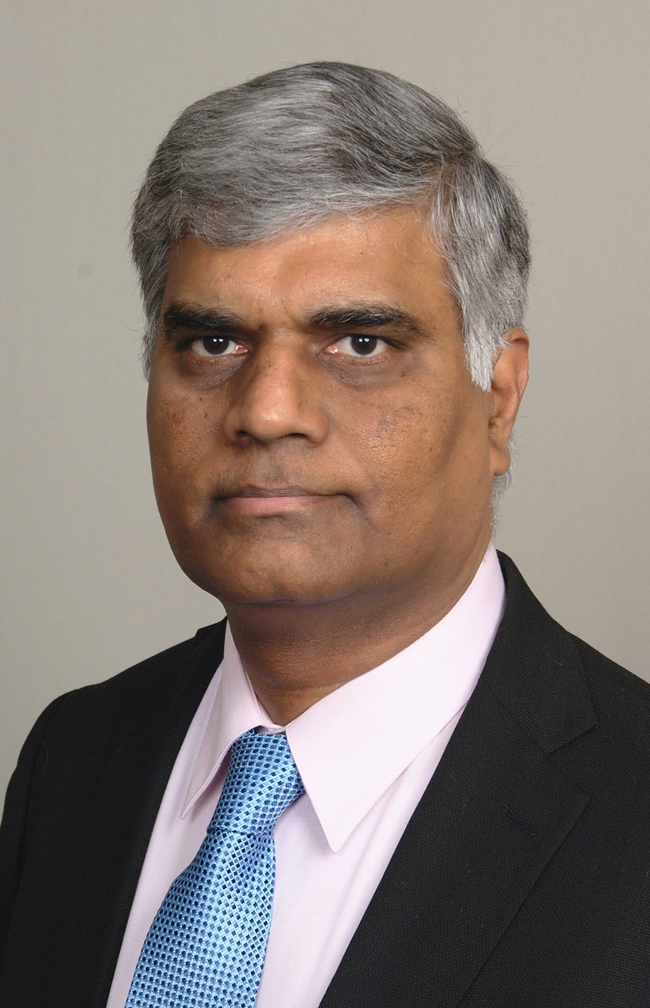
Dr. Deb Chatterjee
Dr. Deb Chatterjee is an Associate Professor in the Computer Science and Electrical Engineering Department at the University of Missouri–Kansas City (UMKC), where he has served since 1999 after earning his Ph.D. in Electrical Engineering from the University of Kansas in 1998. A Senior Member of IEEE and an active member of the IEEE Antennas and Propagation Society, Dr. Chatterjee’s research spans ultrawideband and electrically small antennas, phased arrays, electromagnetic pulse propagation, directed energy, wireless power transfer, Zenneck and surface wave propagation, and computational electromagnetics. He has extensive experience in developing advanced antenna technologies, multilayer Green’s function techniques, RF propagation models, and UWB microstrip antenna designs, supported by state-of-the-art RF simulation and measurement facilities at UMKC. As an ONR Summer Faculty Fellow from 2009 to 2017, he contributed significantly to applied electromagnetics research, including innovative methods for Sommerfeld integral evaluation, RF propagation in layered media, UWB antenna development, and exploratory studies on EM pulse and Zenneck wave propagation for strategic communications and directed energy applications.
Dr C J Reddy
Dr. C. J. Reddy, Fellow of IEEE, WAMSS, ACES, AMTA, and IETE, is a globally renowned expert in antennas, RF and microwave engineering, and computational electromagnetics, currently serving as Vice President, Business Development – Electromagnetics (Americas) at Altair Engineering, Inc. With a Ph.D. from IIT Kharagpur and over three decades of experience, he has led pioneering advancements including paint-on antennas, compact broadband and anti-jam GPS antennas, and the uCAST asymptotic EM solver, with several technologies successfully transitioned to U.S. Department of Defense applications. He previously served as President of Applied EM Inc. and EM Software & Systems (USA), contributing significantly to the growth of FEKO in North America. Dr. Reddy’s earlier research roles at NASA Langley, Hampton University, CRC Canada, and SAMEER India shaped foundational developments in hybrid FEM/MoM/GTD techniques, cavity-backed antennas, scattering analysis, and radar systems. Widely published and honored with the NSERC International Visiting Fellowship and NRC Research Associateship, Dr. Reddy continues to be a leading figure in the global electromagnetics community and a Life Fellow of WAMSS.
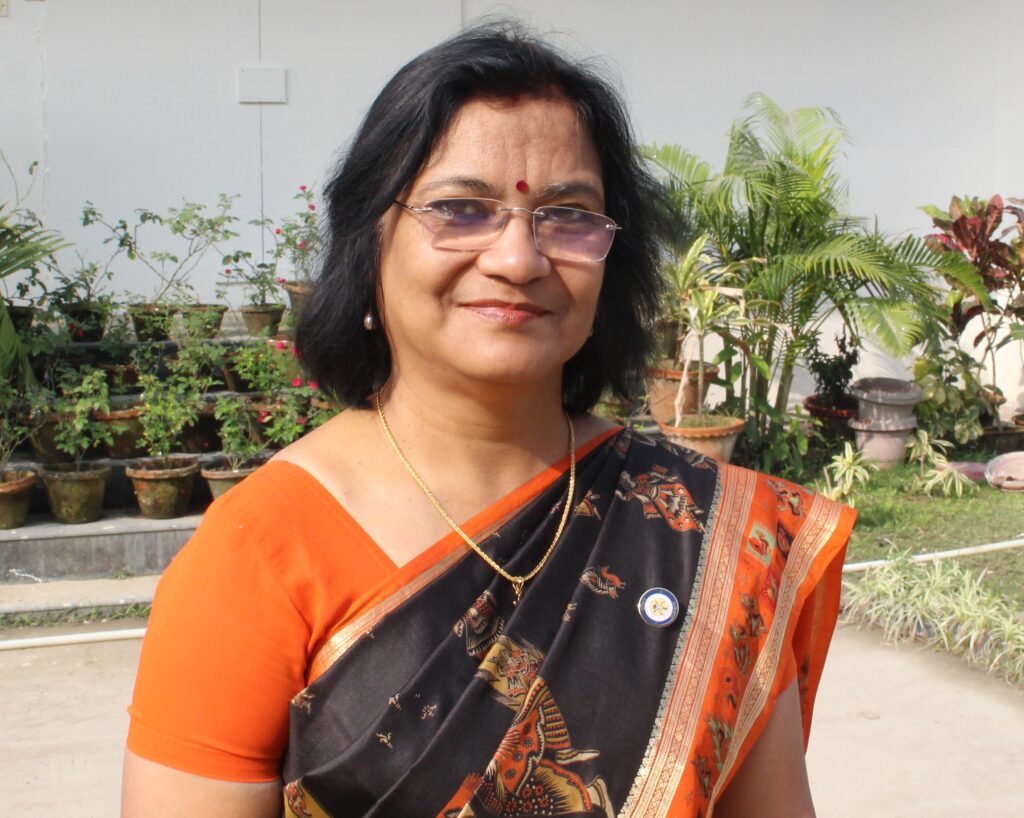
Madhumita Chakravarti
Ms. Madhumita Chakravarti has served DRDO/RCI with distinguished contributions in the design and development of advanced Radio Proximity Fuze (RPF) systems for Surface-to-Air, Air-to-Air and Ballistic Missile Defence weapon platforms. She led the creation of a generalized end-game algorithm capable of engaging both maneuvering and ballistic targets and spearheaded complete system indigenization through the design of multiple RF multifunction MMICs, including receiver and transmitter chips with integrated LNA, mixers, couplers, preamplifiers, power dividers and power amplifiers. Her work incorporates advanced techniques such as oversampling for improved range resolution and a high-speed two-dimensional range–Doppler map with a processing time of just 200 microseconds, achieving an exceptional system reliability of 99.96%. She guided the development of a DRFM-based portable target simulator and data acquisition system for qualification, integration and field testing, and conceptualized a dynamic evaluation method at PXE Balasore for assessing high-speed engagements. Her designs have been successfully qualified for extreme dynamic and climatic environments, transferred to industry partners, and produced at scale—over 2000 units for the AKASH weapon system—with further deployments for ASTRA, AAD, QRSAM, and AKASH-1S. As Director, CMSDS, she established a state-of-the-art mm-wave semiconductor fabrication facility and initiated fabrication, strengthening national capabilities in strategic defence technologies.
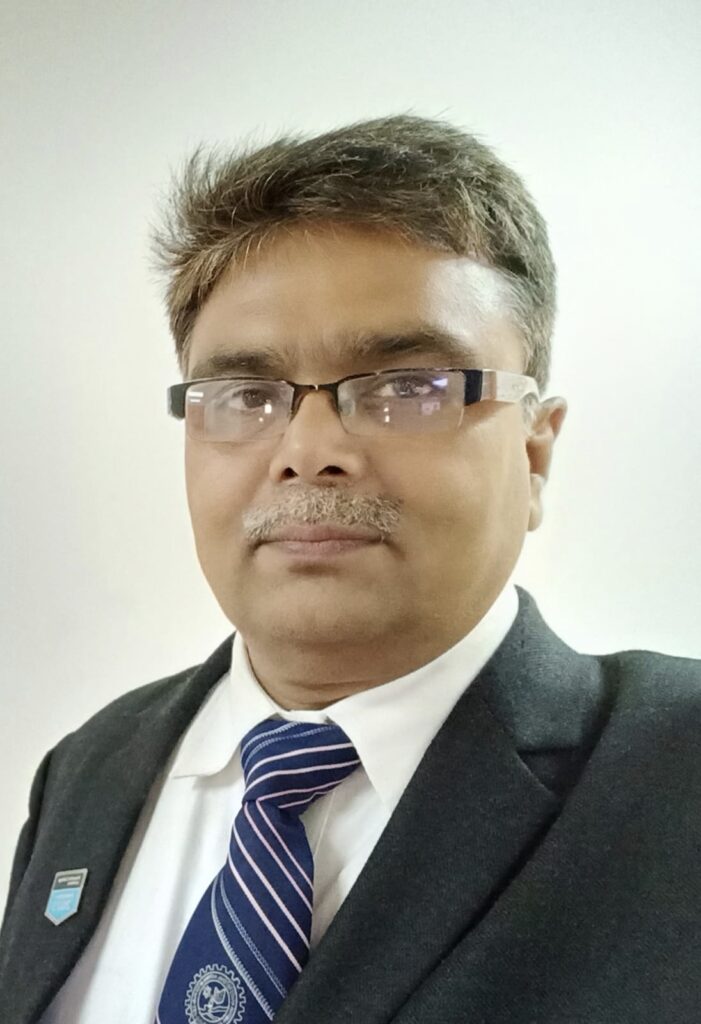
Dr. Vijay Shanker Tripathi
Dr. Vijay Shanker Tripathi is a Professor in the Department of Electronics & Communication Engineering at Motilal Nehru National Institute of Technology (MNNIT) Allahabad, with over 22 years of teaching and research experience. He holds a Ph.D. and M.E. from MNNIT Allahabad and a B.Tech. from the University of Allahabad. His research focuses on RF circuits and systems, dielectric resonator and microstrip antennas, metamaterial-based and implantable antennas, non-invasive RF sensors, near-field imaging for medical applications, intelligent transportation systems, SDR, neural networks, and cognitive radio. Dr. Tripathi has led multiple sponsored research projects, supervised numerous Ph.D. and M.Tech. theses, and published extensively in reputed international journals and conferences. His contributions include wideband wearable antennas for MIoT/5G, non-invasive microwave glucose sensing, and advanced antenna designs for ITS and biomedical applications. A Senior Member of IEEE and member of several IEEE societies, he has delivered invited lectures across India, organized major technical events including IEEE MAC 2023, and actively contributes to academic leadership and advanced RF/microwave research at MNNIT Allahabad.

Dr. Jaume Anguera
Dr. Jaume Anguera (IEEE Fellow) is the Founder and CTO of Ignion and an Associate Professor at Universitat Ramon Llull, Barcelona, with a distinguished career in antenna research, innovation, and technology development. He holds engineering and Ph.D. degrees from UPC Barcelona and has over two decades of experience spanning academia and industry, including leading R&D at Fractus in Spain and South Korea, where he contributed to breakthrough antenna technologies for major global manufacturers. He is the inventor of Antenna Booster Technology (Virtual Antenna®), holds more than 180 granted patents adopted worldwide, and has authored over 300 research publications, 7 books, and supervised more than 170 theses. Dr. Anguera has delivered over 80 invited lectures globally, participated in 24+ funded research projects worth over $14M, and received numerous prestigious awards, including the European Patent Award finalist distinction and Technology Pioneer recognition from the World Economic Forum. His research interests include multiband and small antennas, MIMO systems, antenna booster technology, fractal antennas, and genetically optimized antenna systems.